Hop-On Hop-Off Seine Boat vs a Standard Sightseeing Cruise: Which Paris River Cruise Fits Your Day
Two very different products share the Seine: a multi-stop river shuttle you ride like transport, and a one-hour narrated loop built purely for sightseeing. Here is how they actually differ in price, pace and payoff.
Short answer
A Batobus hop-on hop-off pass costs EUR 23 adult for 24 hours and covers 9 stops with boats every 15-40 minutes, but has no narration. A narrated 1-hour sightseeing cruise runs from about $20-21 per person. Pick Batobus for a multi-site day, the cruise for a focused scenic hour.
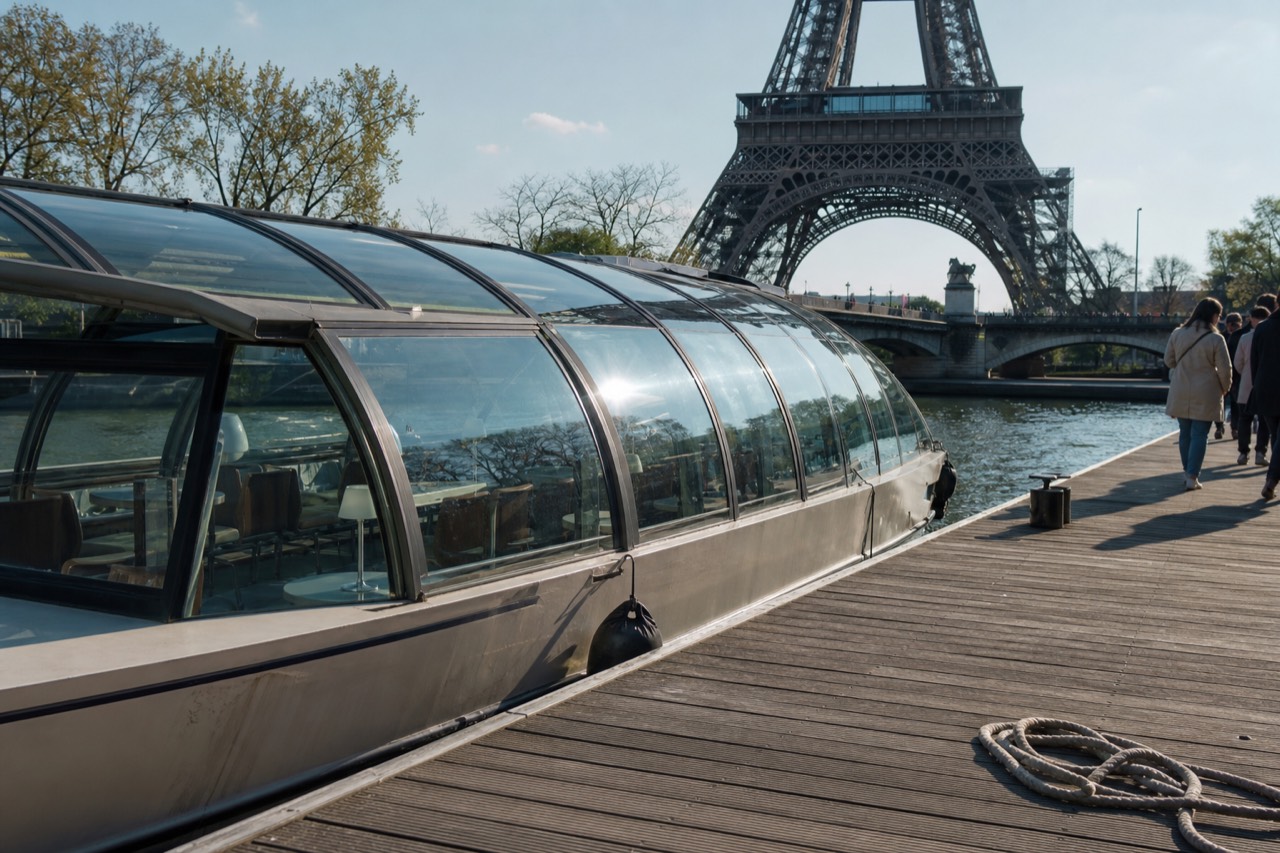
Two products share the Seine and get confused for each other constantly. One is the Batobus, a glass-walled shuttle that stops at nine quays along the river and works like a bus on water. The other is the classic one-hour sightseeing cruise, a continuous narrated loop that leaves from a single dock, floats you past the Eiffel Tower, the Louvre and Notre-Dame, and brings you back. They cost about the same to start, they pass the same monuments, and they suit completely different days in Paris. This guide separates them honestly, with current 2026 pricing, the real stop list, and the traveler-preference pattern that shows up again and again in recent reviews.
What is a hop-on hop-off Seine cruise, exactly?
A hop-on hop-off Seine cruise is not really a cruise in the sightseeing sense: it is scheduled river transport. The Batobus, operated with RATP, runs glass-enclosed boats with an open terrace between nine fixed stops along the Seine, roughly every 15 to 40 minutes, and a pass lets you board and disembark as often as you like for 24 or 48 hours. There is no live guide and no audio commentary on board.
That last point matters more than any other line in this guide. Traveler reviews from 2025 and 2026 are remarkably consistent about it: people who expected a narrated tour came away disappointed, and people who wanted a scenic way to get from the Eiffel Tower to the Louvre loved it. One recent review calls it "a bus on the water, in the best way," while another warns plainly that staff can answer questions but nobody is guiding you past the monuments. Both descriptions are accurate.
The full loop, if you stay on board without hopping, takes about 1 hour 45 minutes to 2 hours. Boats run seasonally, typically from around 10 a.m. into the early or mid evening depending on the time of year. The product in our roster is the Batobus pass with 9 stops, rated 4.4/5 with 6,425 reviews, from $27, with a 48-hour option also on the live listing.
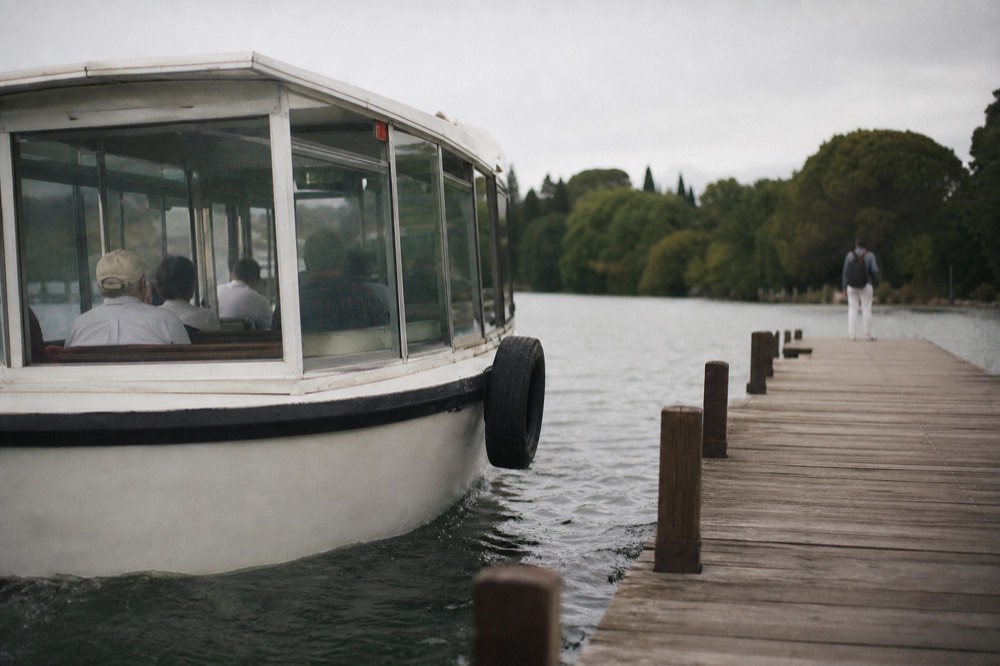
If your mental model is "boat tour," recalibrate to "boat tram." Once you do, the strengths and the trade-offs both become obvious.
Hop-on hop-off or a 1-hour loop: which one fits your day?
Choose the hop-on hop-off pass when your day involves three or more riverside sights and you want the river to replace the Metro. Choose the standard sightseeing cruise when you want one continuous, narrated, hour-long experience with a fixed start and finish. Recent traveler sentiment splits exactly along that line: Batobus for multi-site flexibility, the narrated loop for a focused scenic hour.
The pattern comes straight out of 2025-2026 reviews and forum threads. People pairing the Eiffel Tower with the Musée d'Orsay and Notre-Dame in one day praise the pass as a calm, dry, traffic-free way to connect them. People with a single free evening, or a photographer wanting a predictable hour of monument views, consistently prefer the classic cruise. Nobody in either camp is wrong; the products are simply built for different itineraries.
Here is the honest side-by-side:
| Factor | Batobus hop-on hop-off pass | Standard 1-hour sightseeing cruise |
|---|---|---|
| Purpose | River transport between sights | One continuous scenic loop |
| Narration | None; interactive web app for stop info, no commentary | Audio commentary (up to 12-14 languages) or live guide depending on operator |
| Duration | Your choice; full loop about 1h45-2h | Fixed, about 1 hour |
| Boarding | 9 stops, hop on and off freely | One departure dock, round trip |
| Typical price | From $27 for a 24- or 48-hour pass | From $20-21 per person |
| Best for | Multi-sight days, tired feet, rain | First visit, photos, a relaxed hour |
| Trade-off | No guiding, waits of 15-40 minutes between boats | No flexibility, one shot at the views |
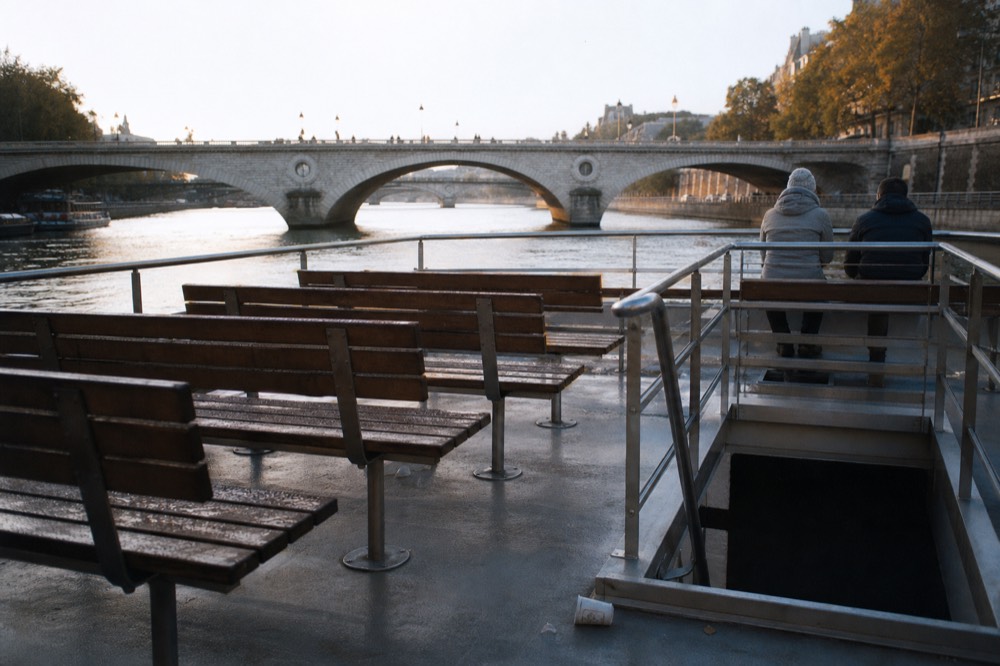
A note on combining them: some travelers do exactly that, a narrated loop on the first evening to get oriented, then a Batobus day later in the trip. It is a genuinely sensible pattern if your stay is four nights or longer.
If you already know which side of that table you fall on, these are the three listings worth comparing first:
How much does a Batobus pass cost in 2026?
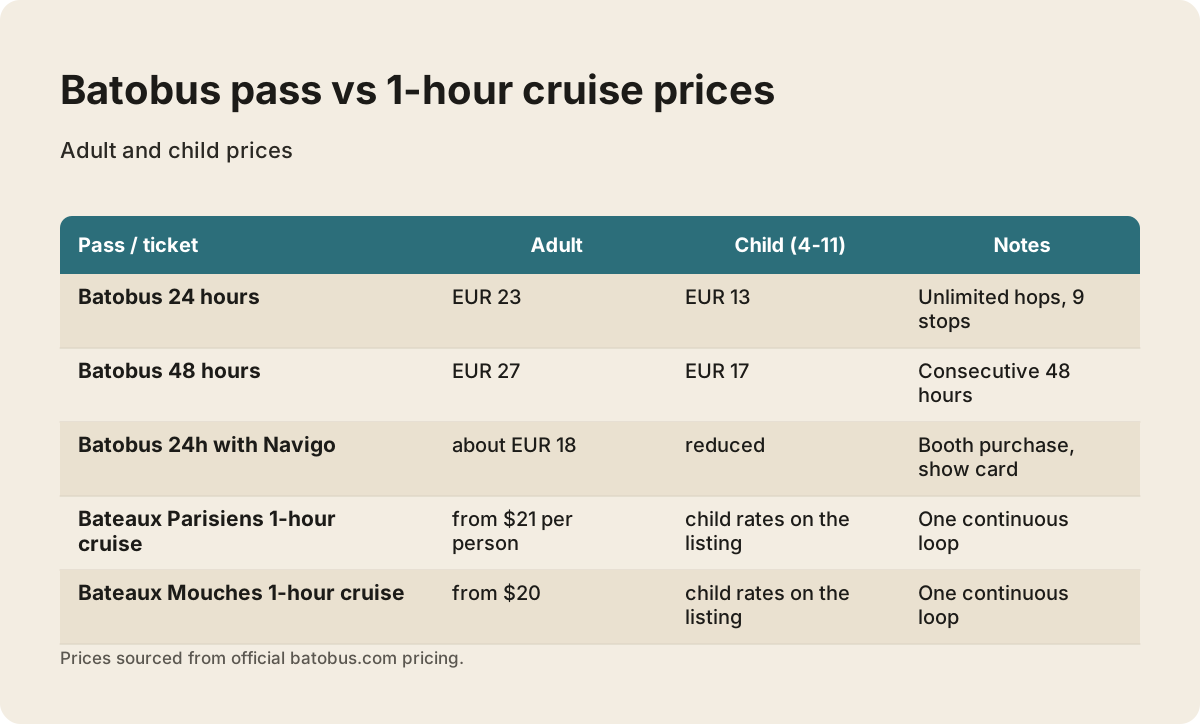
A 24-hour Batobus pass costs EUR 23 for an adult and EUR 13 for a child aged 4-11, with a 48-hour pass at EUR 27 and EUR 17 (official batobus.com pricing). Children under 4 travel free. Navigo pass holders pay reduced rates of about EUR 18 for 24 hours and EUR 22 for 48 hours at the ticket booth, and the Paris Museum Pass does not include any Seine cruise.
That Navigo detail is the one most visitors miss. If you are already carrying a Navigo card for the Metro and RER, showing it at the Batobus booth saves roughly EUR 5 on the day pass, which narrows the gap to a standard cruise ticket considerably. The Museum Pass exclusion is worth stating just as plainly: no listed Seine operator, Batobus included, is bundled into the Paris Museum Pass, so do not build an itinerary assuming a free cruise comes with it.
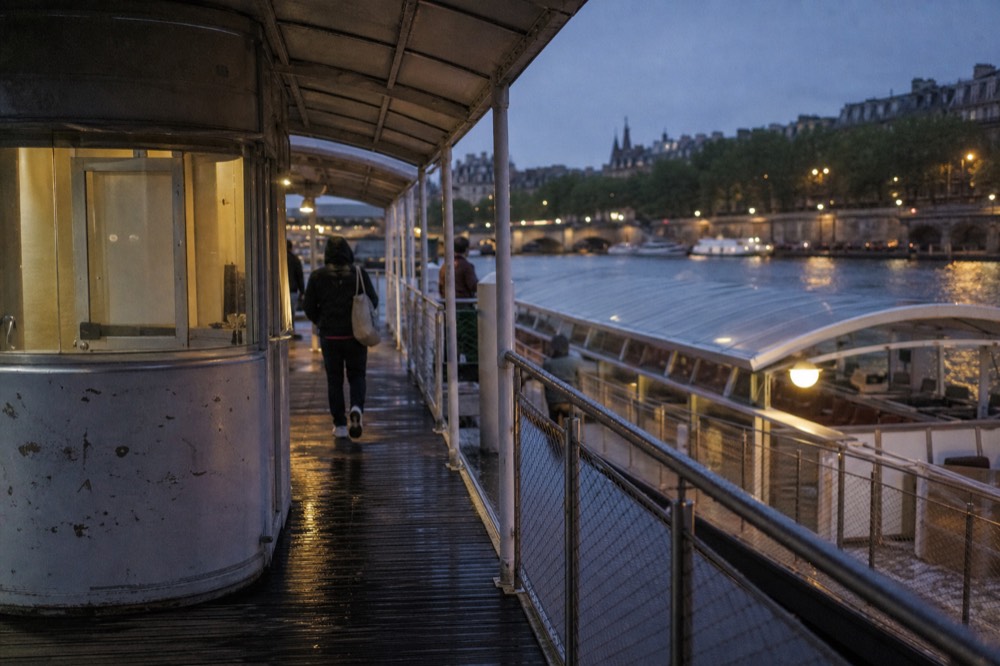
For comparison, the two most-booked narrated loops in the same category start lower per person: the Bateaux Parisiens 1-hour cruise from the Eiffel Tower runs from $21, and the Bateaux Mouches sightseeing cruise from Pont de l'Alma runs from $20. Per ride, Batobus is the more expensive product unless you hop at least twice.
| Pass / ticket | Adult | Child (4-11) | Notes |
|---|---|---|---|
| Batobus 24 hours | EUR 23 | EUR 13 | Unlimited hops, 9 stops |
| Batobus 48 hours | EUR 27 | EUR 17 | Consecutive 48 hours |
| Batobus 24h with Navigo | about EUR 18 | reduced | Booth purchase, show card |
| Bateaux Parisiens 1-hour cruise | from $21 per person | child rates on the listing | One continuous loop |
| Bateaux Mouches 1-hour cruise | from $20 | child rates on the listing | One continuous loop |
What do you actually see from the nine Batobus stops?
The nine Batobus stops include the Eiffel Tower, Musée d'Orsay, the Louvre, Hôtel de Ville and Notre-Dame, each within a short walk of a major sight. The boat passes every central Seine landmark on the loop: the Eiffel Tower, Pont Alexandre III, the Louvre, Notre-Dame and the Île de la Cité.
The stop list is the real product. Each one is placed so that a major museum or monument sits a few minutes' walk from the pontoon, which is why the pass works as a sight-hopping tool. The Eiffel Tower stop puts you at the Trocadéro crossing and the tower itself; the Musée d'Orsay stop serves the museum and the Invalides; the Louvre stop drops you between the Tuileries and the palace; the Notre-Dame stop opens onto the Île de la Cité and Sainte-Chapelle.
| Batobus stop | What is within walking distance |
|---|---|
| Eiffel Tower | The tower, Trocadéro views, Champ de Mars |
| Champs-Élysées | Grand Palais area, avenue shopping |
| Musée d'Orsay | Musée d'Orsay, Invalides |
| Louvre | Louvre, Tuileries Garden, Place de la Concorde |
| Hôtel de Ville | Hôtel de Ville, Marais district |
| Notre-Dame | Notre-Dame Cathedral, Sainte-Chapelle, Conciergerie |
| Jardin des Plantes | Botanical garden, Natural History Museum |
| Eastern quays | Bercy Village, Parc de Bercy |
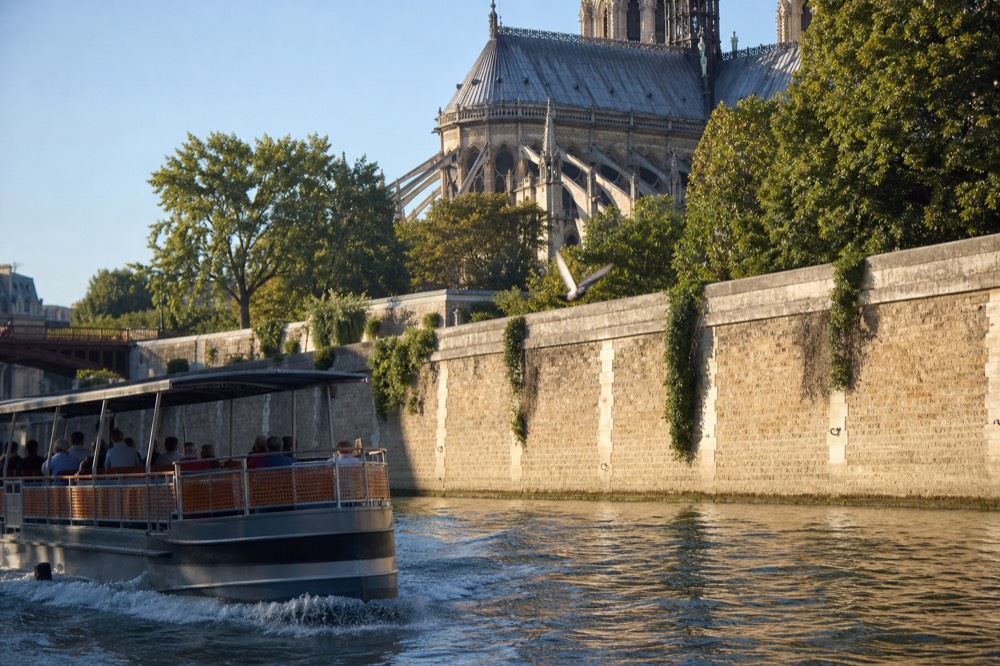
One honest caveat: the stops at the eastern and western ends of the loop are quieter and see fewer boats per hour, so check the posted frequency at the pontoon before committing to a far-flung hop late in the day. Waiting 40 minutes for a shuttle with a tired family is the single most common Batobus complaint in recent reviews.
Is hop on hop off boat in Paris worth it?
For most visitors, yes, but only for a specific kind of day: three or more riverside sights, legs that are tired of Metro stairs, or rainy weather when an enclosed glass boat beats walking. Reviews from 2025-2026 consistently frame Batobus as good value for flexible exploration and poor value if you only ride once or expect a guided tour.
The value math is simple. A single full loop without hopping costs more than a narrated cruise and delivers no commentary, so one-ride use is the worst possible way to buy it. Two hops in a day, say Eiffel Tower to the Louvre in the morning and the Louvre to Notre-Dame in the afternoon, already make the pass competitive with two Metro journeys plus a cruise, and the scenery comes free. Three or more hops and it wins outright. Our companion piece looks at whether the hop-on hop-off pass pays off in more depth, with real traveler sentiment from 2025-2026.
The negative reviews cluster in two places, and both are avoidable. First, people who bought it expecting narration: there is none, and the listing says so. Second, people who hopped at a low-frequency stop at the wrong hour and waited half an hour or more. Plan your hops around the main central stops and the product behaves exactly as promised.
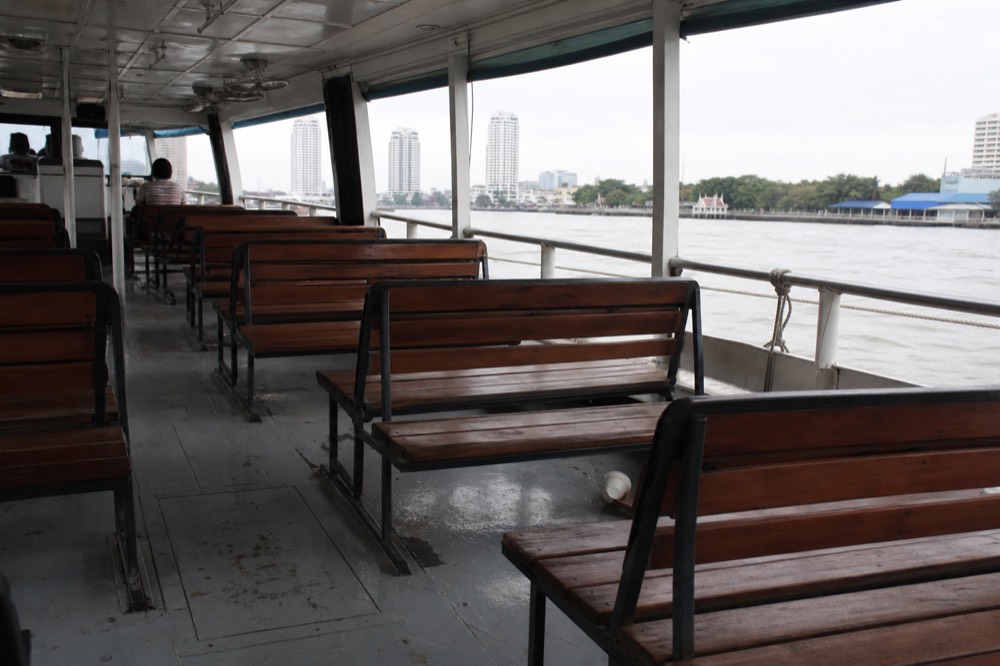
Families report an extra benefit that rarely makes the marketing copy: the boats are stroller-friendly with fold-up carriages recommended, and children treat the shuttle itself as an attraction. Our deeper treatment of the trade-offs sits in the guide on whether a Seine cruise is worth it at all, which covers the narrated side of the question.
When is a narrated sightseeing cruise the better pick?
A narrated 1-hour cruise is the better pick when you want a single, complete experience: one boarding point, a fixed hour, audio or live commentary explaining what you are passing, and no decisions to make afterward. It is also the stronger choice for photographers and for a first evening in the city, when orientation matters more than mobility.
The default option here is the Bateaux Parisiens 1-hour cruise departing from Port de la Bourdonnais at the foot of the Eiffel Tower: 4.4/5 with close to 90,000 reviews, from $21 per person, with audio commentary in up to 14 languages via app and a route past Notre-Dame, the Louvre and the Musée d'Orsay. It is the most-booked sightseeing product in the category for a reason: the departure point is where most visitors already are.
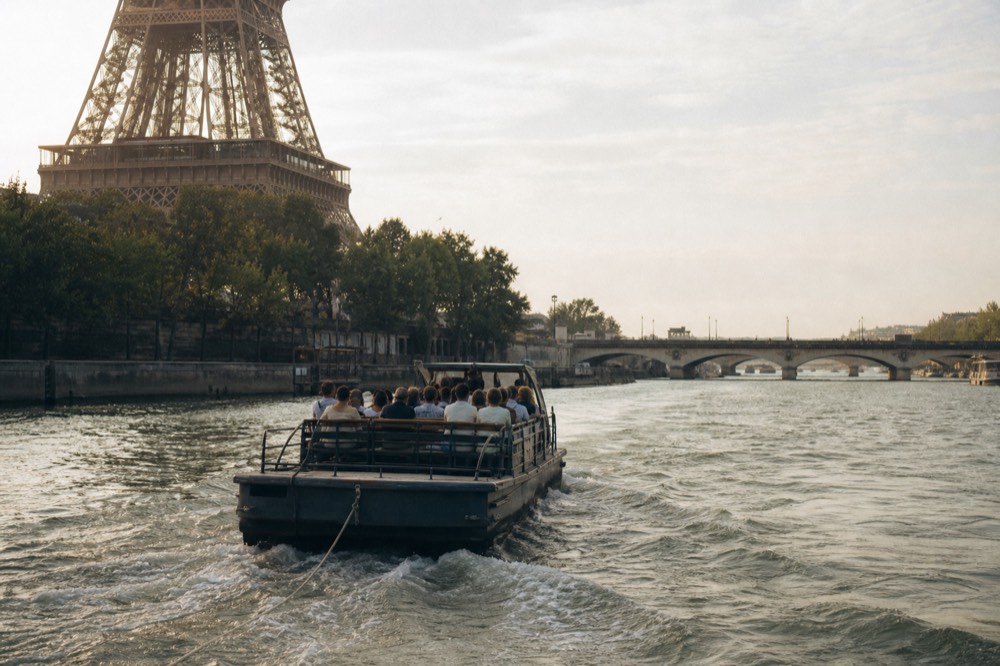
The historic alternative is the Bateaux Mouches sightseeing cruise, from $20, rated 4.4/5 with 5,898 reviews, departing from Port de la Conférence near Pont de l'Alma. The company has operated on the Seine since 1949, the boats have a heated and air-conditioned main deck plus an open upper deck, and commentary runs through a web app in 12 languages with GPS positioning. For a deeper operator-by-operator comparison, see Bateaux Parisiens vs Bateaux Mouches vs Vedettes de Paris.
One more honest note from recent reviews: crowding is the recurring complaint on standard cruises, especially on peak-season evening sailings, and some dinner-cruise reviewers feel the food does not match the view. Arriving 30-45 minutes early for an upper-deck railing seat is the standard advice, and it holds.
Practical boarding and timing tips for both options
Arrive 30-45 minutes early for a narrated cruise if you want an upper-deck seat, and check the posted boat frequency at any Batobus stop before hopping far from the center. Sightseeing cruises are walk-up friendly with departures roughly every 30-60 minutes, while Batobus boats run every 15-40 minutes; both are weather- and water-level dependent.
On the cruise side, the mechanics are simple: digital tickets are scanned at the pontoon, expect a bag check at the Eiffel Tower docks, and the upper deck fills first. Morning departures get lighter crowds and calmer light; sunset and evening sailings trade that for the illuminated monuments and the Eiffel Tower's hourly five-minute sparkle, which runs from the first full hour after dusk until midnight, or 1 a.m. in summer. Our guide on the best time for a Seine cruise breaks the timing question down by season.
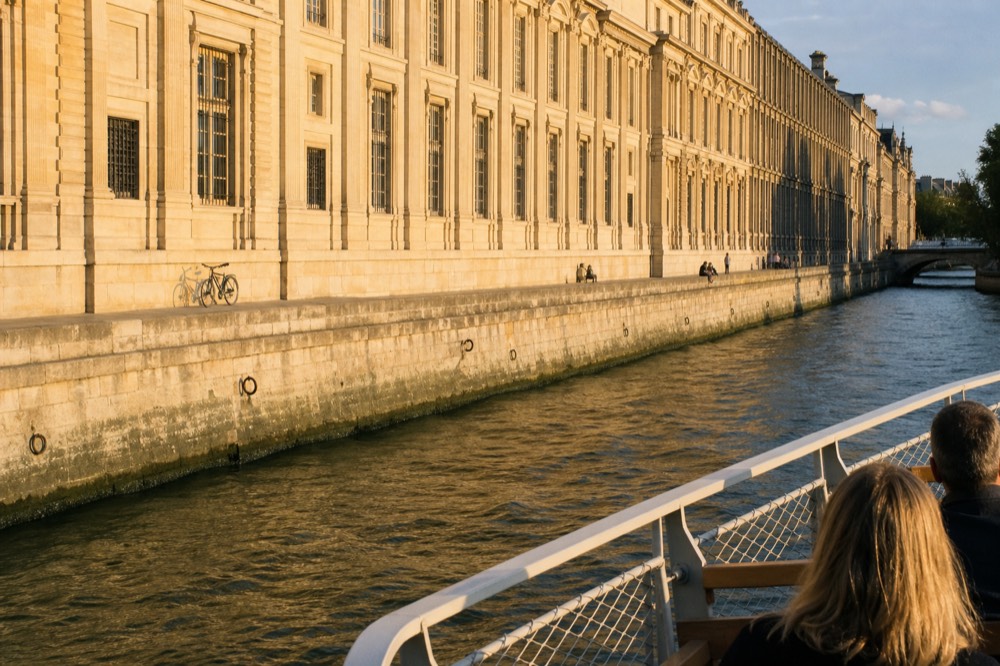
On the Batobus side, three practical points. First, the pass is valid for unlimited hops during operating hours, so a 24-hour pass bought at 10 a.m. covers you into the same evening. Second, accessibility is uneven: the Eiffel Tower and Louvre stops are the ones commonly cited as wheelchair-accessible, while other docks have steps, so confirm with the operator if that matters to your group. Third, high water can disrupt everything: navigation on the Seine through Paris is halted outright once the river reaches 4.30 m at the Austerlitz gauge, and below that threshold operators shorten routes or close upper decks rather than cancel outright, as they did during the October 2024 high-water event. Current levels are tracked publicly at vigicrues.gouv.fr, and early September 2026 readings sat in the normal range at around 0.95 m.
Which should you book for your trip?
Book the Batobus pass if your itinerary strings together three or more riverside sights in one or two days, if you are traveling with children or tired legs, or if rain is forecast. Book the narrated 1-hour cruise if this is a first visit, if you want commentary and photography time, or if you have exactly one free evening. Doing both across a longer stay is a reasonable plan, not an indulgence.
The decision rarely needs more than one question answered honestly: is your day about moving between places, or about the river itself? Everything else, price, frequency, even the crowding complaints, follows from that. And if the answer changes mid-trip, sightseeing tickets are sold at the docks all day, so nothing is locked in.
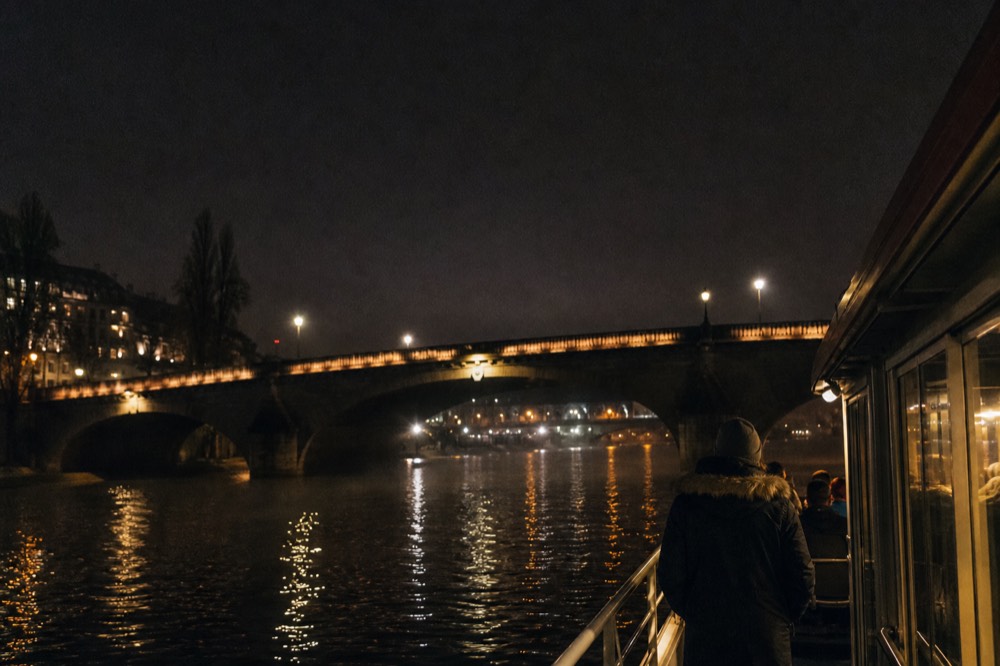
For a fuller price picture across every cruise type, from the EUR 15-21 sightseeing band to the dinner boats, our Seine cruise prices guide covers the whole market. And if you are still weighing whether the river belongs in your itinerary at all, start with Cruise in Seine River and work outward from there.
Whichever format you lean toward, the three listings below are the ones this comparison keeps coming back to: the multi-stop pass for sight-hopping days, and the two most-booked narrated loops for the focused scenic hour. Checking live availability on all three takes a couple of minutes and settles the question faster than any amount of further reading.
The short answers: Batobus costs EUR 23 for 24 hours, runs every 15-40 minutes between nine stops, and has no commentary, while narrated loops run from $20-21 per person and last about one hour. The questions below cover the details travelers ask most often.
Common questions about hop-on hop-off Seine boats vs sightseeing cruises
Is hop on hop off boat in Paris worth it?
Yes, for multi-sight days: the 24-hour pass costs EUR 23 adult and pays for itself with two or more hops between the Eiffel Tower, Louvre and Notre-Dame. It is poor value if you ride only once or expect narration, because Batobus has no commentary at all.
Does the Batobus include commentary or a guided tour?
No. Batobus is river transport with an interactive web app for stop information, but no live or recorded commentary. If narration matters to you, a standard 1-hour sightseeing cruise with audio commentary in up to 14 languages is the right product.
How often do Batobus boats run?
Roughly every 15 to 40 minutes depending on the stop and season, with the full loop taking about 1 hour 45 minutes to 2 hours. Central stops see more frequent service than the eastern and western ends of the line.
Is a Batobus pass cheaper than a sightseeing cruise?
Per person for a single ride, no: the pass costs from $27 against from $20-21 for the narrated loops. With two or more hops in a day, the pass becomes the better value because each additional ride is free.
Can weather or river levels cancel either one?
Yes. Navigation on the Seine through Paris stops outright at 4.30 m on the Austerlitz gauge, and below that operators may shorten routes or close upper decks, as happened in October 2024. Sightseeing cruises also run to weather-dependent schedules; check the operator's notice before heading to the dock.
Can I do both a hop-on hop-off day and a narrated cruise?
Absolutely, and many travelers do on trips of four nights or longer: a narrated evening loop to get oriented on day one, then a Batobus day later in the stay for sight-hopping. The two products complement rather than compete.