Is a hop-on hop-off boat in Paris worth it?
A practical look at Paris hop-on hop-off boat passes: how Batobus pricing, stops, and flexibility compare to a classic Seine sightseeing cruise, and when each is the better choice.
Is a hop-on hop-off boat in Paris worth it?
The hop-on hop-off boat in Paris is worth it if you plan to visit multiple riverside landmarks in a single day and prefer flexible, self-paced transport over a guided sightseeing loop. For about $27 you get unlimited boarding at nine stops for a full day, turning the Seine into a practical shuttle. If you want a narrated cruise with commentary, a standard one-hour sightseeing ticket is the better pick.
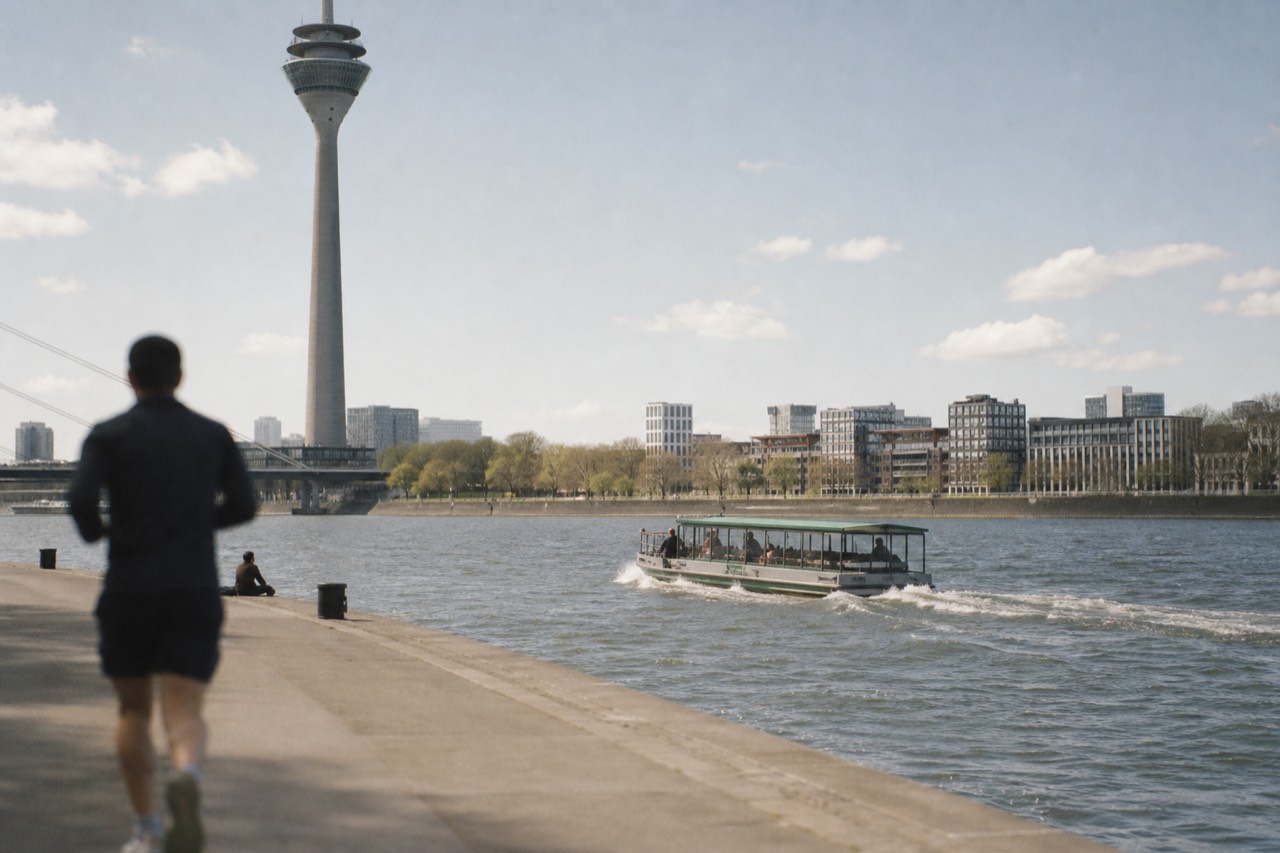
The only true hop-on hop-off Seine boat is the Batobus, a glass-enclosed shuttle that stops at nine fixed quays from the Eiffel Tower to the Jardin des Plantes. Unlike a classic sightseeing cruise that sails a loop with audio or live commentary, Batobus runs as transport: you hop on at one stop, ride to the next, explore on land, and reboard when you're ready. This site's Cruise in Seine River comparison guides draw the same distinction, and the real decision comes down to how you want to spend your time on the water.
Batobus passes are sold in 24-hour and 48-hour increments, from $27 for adults; children aged 4-11 pay less. Check the live listing for the exact figure at each duration. Boats arrive roughly every 15–40 minutes depending on the season, and a full loop takes about 1 hour 45 minutes if you stay aboard the entire circuit. Because there is no narration, the experience is closer to a river bus than a tour. That's not a flaw, it's the design, and it's exactly why some travelers love it and others walk away underwhelmed.
How does the Batobus pass actually work?
You buy a timed pass online or at any Batobus stop, then board and disembark as often as you like at nine fixed piers during the pass window. There is no reserved seating, no guided commentary, and no single-loop itinerary; it's a public shuttle that happens to float past some of the most famous monuments in the world.
The nine stops cover the major sightseeing axis: Eiffel Tower (Port de la Bourdonnais), Invalides, Musée d'Orsay, Saint-Germain-des-Prés, Notre-Dame, Jardin des Plantes, Hôtel de Ville, Louvre, and Champs-Élysées. That means you can, for example, start at the Eiffel Tower in the morning, ride to Notre-Dame, explore the island, then hop back on to reach the Louvre in the afternoon, all without buying separate tickets or walking long distances.
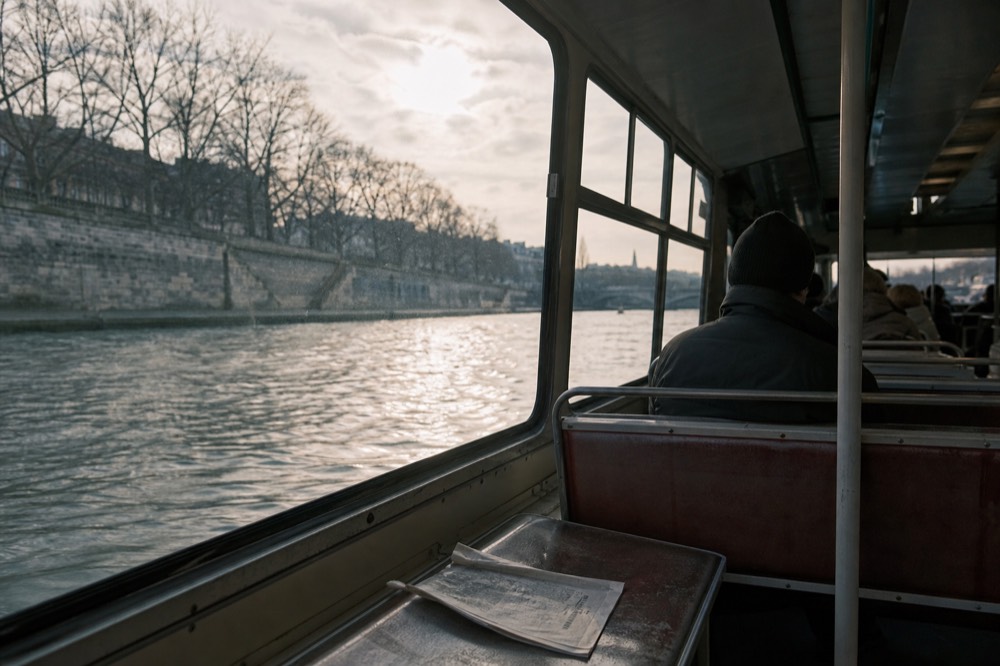
Boats are glass-enclosed with an open terrace at the rear, so views are good even when you're seated inside. There is a multilingual web app that provides basic stop information, but no live guide and no recorded historical narration. Staff can answer questions, but the product is intentionally quiet. Batobus is not a sightseeing cruise with a script, it's a flexible transport layer that can replace several Metro rides and a standard cruise if your day is built around moving between riverside sights.
The pass is especially useful on rainy days or when you want to avoid crowded Metro transfers. One recent review noted it was a "godsend in the rain" because the boats are covered and the stops are right beside major attractions. The downside is that without narration, you don't learn the history of the buildings gliding past your window unless you research it yourself. That's a real trade-off, and it's the reason many visitors combine a Batobus pass with a separate narrated cruise or a walking tour.
How does the Batobus compare to a standard Seine sightseeing cruise?
A standard one-hour Seine cruise gives you a seated, narrated loop past the same landmarks with a clear beginning and end, while Batobus gives you unlimited hop-on hop-off access with no commentary. The cruise is better for a single, focused experience; Batobus is better for multi-stop, all-day use.
The table below breaks down the key differences using the most popular products in each category. The standard cruises referenced are the 1-hour Bateaux Parisiens departure from the Eiffel Tower (from $21 per person) and the Bateaux Mouches sightseeing cruise (from $20 per person), both with audio commentary in multiple languages.
| Feature | Batobus 24h pass | Standard 1-hour cruise (Bateaux Parisiens) | Standard 1-hour cruise (Bateaux Mouches) |
|---|---|---|---|
| Price (adult) | from $27 | from $21 | from $20 |
| Stops | 9, unlimited hopping | 1, round-trip loop | 1, round-trip loop |
| Duration | 24 hours, ride as you like | 1 hour | 1 hour |
| Commentary | None (web app with basic info) | Audio app, up to 14 languages | Audio via web app/QR code, 12 languages |
| Boat type | Glass-enclosed, open terrace | Modern boat, indoor and top deck | Main deck (heated/AC) plus open upper deck |
| Best for | Multi-site transport, rainy days, families | Relaxed scenic loop with narration | Classic, historic brand experience |
The price gap narrows quickly if you would otherwise buy two separate one-way Metro tickets and a cruise. A single Batobus pass can replace both, but only if your itinerary naturally moves along the river. For example, a single Metro ticket costs about $2.30, so if you take four Batobus rides in a day, you're paying roughly $6.75 per ride, which is more than the Metro but includes a scenic route. However, if you'd otherwise buy a $21 cruise plus two Metro tickets, the Batobus pass can actually save you money while giving you more flexibility. The key is to map out your day: if your itinerary includes the Eiffel Tower, Musée d'Orsay, Notre-Dame, and the Louvre, the Batobus connects all four without any walking between stations. For the full breakdown of ticket prices across every Seine operator, see Seine river cruise prices in Paris, or the shorter version of how much a Seine cruise actually costs if you just want the headline figures.
Real traveler sentiment from 2025–2026 TripAdvisor reviews consistently frames Batobus as "excellent for hopping between sights" and "great value if you use it multiple times," while standard cruises are praised for their "relaxing, informative loop." The most common Batobus complaint is the lack of commentary; the most common cruise complaint is crowding on peak sailings. Neither product is universally better, they serve different needs.
What are the real downsides of the hop-on hop-off boat?
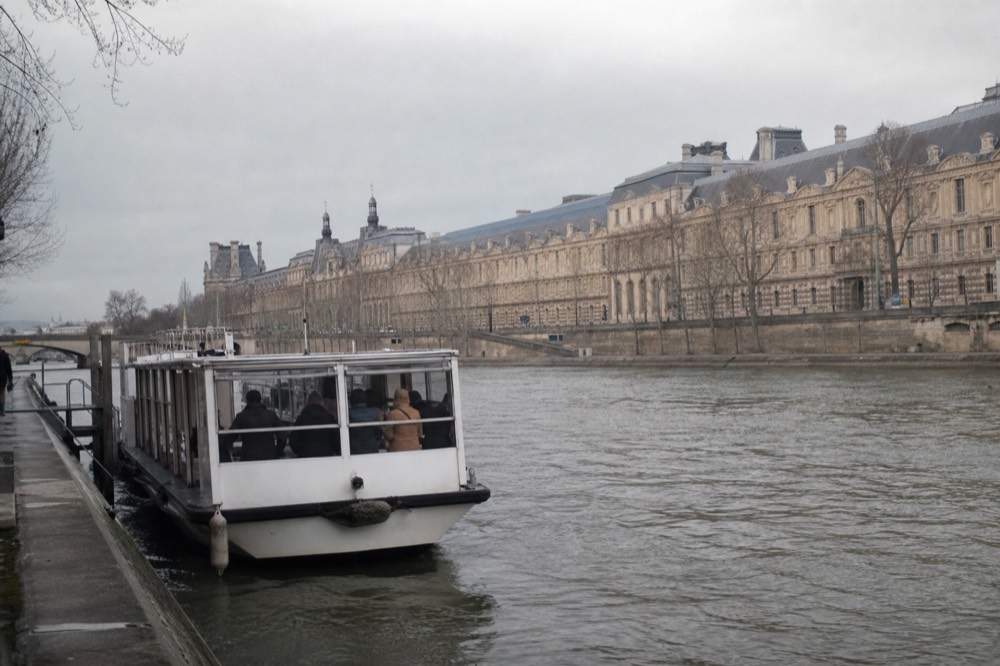
The biggest downsides are the absence of narration, variable wait times at stops, and the fact that not all piers are wheelchair-accessible. Batobus is transport, not a tour, and it shows when you're sitting inside a glass cabin with no guide explaining what you're passing.
Wait times between boats range from 15 to 40 minutes, and in peak summer afternoons, boats can be full, meaning you might watch one depart and wait for the next. The Batobus website recommends arriving early during high season, but there is no reserved seating. If you're on a tight schedule, a fixed-departure cruise is more predictable.
Accessibility is another practical limitation. Only select stops (commonly the Eiffel Tower and Louvre quays) have step-free boarding, according to operator-level information. If you're traveling with a wheelchair or a stroller, you'll want to check the current accessible-stop list before buying a pass. The boats themselves have wide aisles and space for folded strollers, but boarding at some historic quays involves steps.
Another limitation is the schedule. Batobus typically operates from around 10 a.m. to between 5 p.m. and 8 p.m. depending on the season, so it's not suitable for evening or sunset rides. If you want to see the Eiffel Tower sparkle from the water, you'll need a dedicated evening cruise. The Batobus is strictly a daytime transport option, which can be a dealbreaker for travelers who want to combine sightseeing with a romantic night on the river.
The lack of commentary is the dealbreaker for many first-time visitors. You'll see the Musée d'Orsay, Notre-Dame, and the Louvre from the water, but you won't hear their stories unless you bring your own audio guide or read up ahead of time. For some travelers, that silence is a feature, not a bug: you can chat, take photos, and enjoy the view without a recorded voice. For others, it feels like a missed opportunity.
When is the Batobus pass a better buy than a single cruise?
The Batobus pass is a better buy when your day includes three or more riverside stops, when you're traveling with kids who need flexible breaks, or when you want to avoid the Metro and still cover a lot of ground. If you'll only ride from Point A to Point B once, a standard cruise costs less and gives you more context.
The math is straightforward. A Batobus pass costs from $27, while a standard 1-hour cruise costs $20-$21. If you use Batobus for just two hops (say, Eiffel Tower to Notre-Dame and back), you've essentially paid for a round-trip shuttle without commentary. But if you use it for four or five stops across a full day, the per-ride cost drops well below a single Metro ticket, and you get a scenic river route every time. Navigo pass holders can get a discounted Batobus pass for about $18 at ticket booths, which makes it even more competitive against single cruises. For how the full nine-stop circuit compares in length to a standard loop, our Seine river cruise duration and route guide breaks down the timing stop by stop.
Families often find Batobus especially useful. Children under four ride free, and the ability to hop off for a playground break or a snack without losing your transport ticket is a real advantage. The Vedettes du Pont Neuf introduced a dedicated children's snack cruise in April 2026, but that's a separate, narrated product. Batobus remains the only hop-on hop-off option that lets families move at their own pace. For the fuller picture across every cruise type, our dedicated guide for kids and families covers menus and durations that fit younger travelers, and if your day also has a few free stops planned, our guide to free things in Paris rounds up the no-cost options along the same stretch of river.
For visitors who want to learn as they float, a standard narrated cruise is still the better pick. The 1-hour Bateaux Parisiens cruise from the Eiffel Tower, for example, includes audio commentary in up to 14 languages and costs from $21. If you want the single best overall sightseeing pick rather than a hop-on-hop-off pass, our roundup of which river cruise is the best in Paris compares every narrated option side by side.
The Batobus also works well as a backup plan. If you've booked a standard evening cruise and want a daytime river experience without committing to a second fixed-time ticket, a 24-hour pass lets you ride whenever you feel like it. You can even use it as a scenic commute to dinner, hopping off at the stop nearest your restaurant.
The comparison guide between hop-on hop-off and sightseeing cruises lays out the trade-offs in more detail, including which operators offer live guides versus audio apps.

What do recent travelers actually say about the hop-on hop-off boat?
Recent reviews from 2025–2026 describe Batobus as a practical, money-saving river shuttle that works best when you embrace it as transport rather than a tour. Travelers who expected a guided cruise were disappointed; those who used it to hop between museums and monuments called it a highlight of their trip.
One TripAdvisor review from August 2026 called it "the best way to get around Paris if you're sightseeing along the river," noting that the open terrace was perfect for photos and the boat was never overly crowded on a weekday morning. Another review from spring 2026 praised the pass for letting a family with young children "take breaks whenever we needed without losing our ride."
The most frequent criticism, appearing across dozens of reviews, is the lack of information. "It's just a boat ride with no commentary," one reviewer wrote in July 2026. "If you want to learn about Paris, take a guided cruise instead." That sentiment is echoed in Reddit threads on r/ParisTravelGuide, where users often recommend Batobus for "transport days" and a standard cruise for "sightseeing days."
Crowding can be an issue on weekend afternoons and during peak summer, but the same is true of the standard cruises. The difference is that on Batobus, you can simply wait for the next boat or walk to the next stop, while a standard cruise is a single departure. For visitors who value flexibility above all else, that option to adjust on the fly is the product's strongest selling point.
The hop-on hop-off boat is worth it for visitors who want flexible, multi-stop river transport without commentary, while a standard one-hour cruise is better for a single narrated loop. The Batobus pass costs $27 for a 24- or 48-hour pass and covers nine stops, but it lacks guides and can have waits.
Common questions about the hop-on hop-off boat in Paris
Is a hop-on hop-off boat in Paris worth it?
It's worth it if you plan to visit multiple riverside attractions in one day and prefer flexible, self-guided transport over a narrated cruise. For about $27 you get unlimited boarding at nine stops for a full day. If you only need a single scenic loop with commentary, a standard one-hour cruise is the better value.
How much does the Batobus cost in 2026?
An adult pass costs from $27, and a child pass (4-11) costs from $13; the 48-hour option is on the live listing. Navigo cardholders can get a discounted rate of about $18 at ticket booths.
Does the Batobus have live commentary?
No. Batobus is a transport shuttle, not a guided tour. There is a multilingual web app with basic stop information, and staff can answer questions, but there is no live guide or recorded historical narration. For commentary, choose a standard sightseeing cruise.
Is the Batobus wheelchair accessible?
Only at select stops. The Eiffel Tower and Louvre quays are commonly cited as step-free, but other stops may involve stairs. The boats have wide aisles and space for folded wheelchairs and strollers. Contact the operator before booking if accessibility is a concern.
How long does a full Batobus loop take?
A complete circuit of all nine stops takes about 1 hour 45 minutes to 2 hours if you stay on board without disembarking. Boats arrive every 15–40 minutes depending on the season.
Can I use the Batobus pass at night?
Batobus operates on a seasonal schedule, typically from around 10 a.m. until between 5 p.m. and 8 p.m., depending on the time of year. It does not run late enough for evening or sunset cruises. For night views, book a dedicated evening cruise.