Is the Seine River cruise better at night or day?
A practical comparison of daytime and nighttime Seine River cruises in Paris: light quality for photos, crowd levels, the Eiffel Tower sparkle schedule, and which departure time fits which traveler.
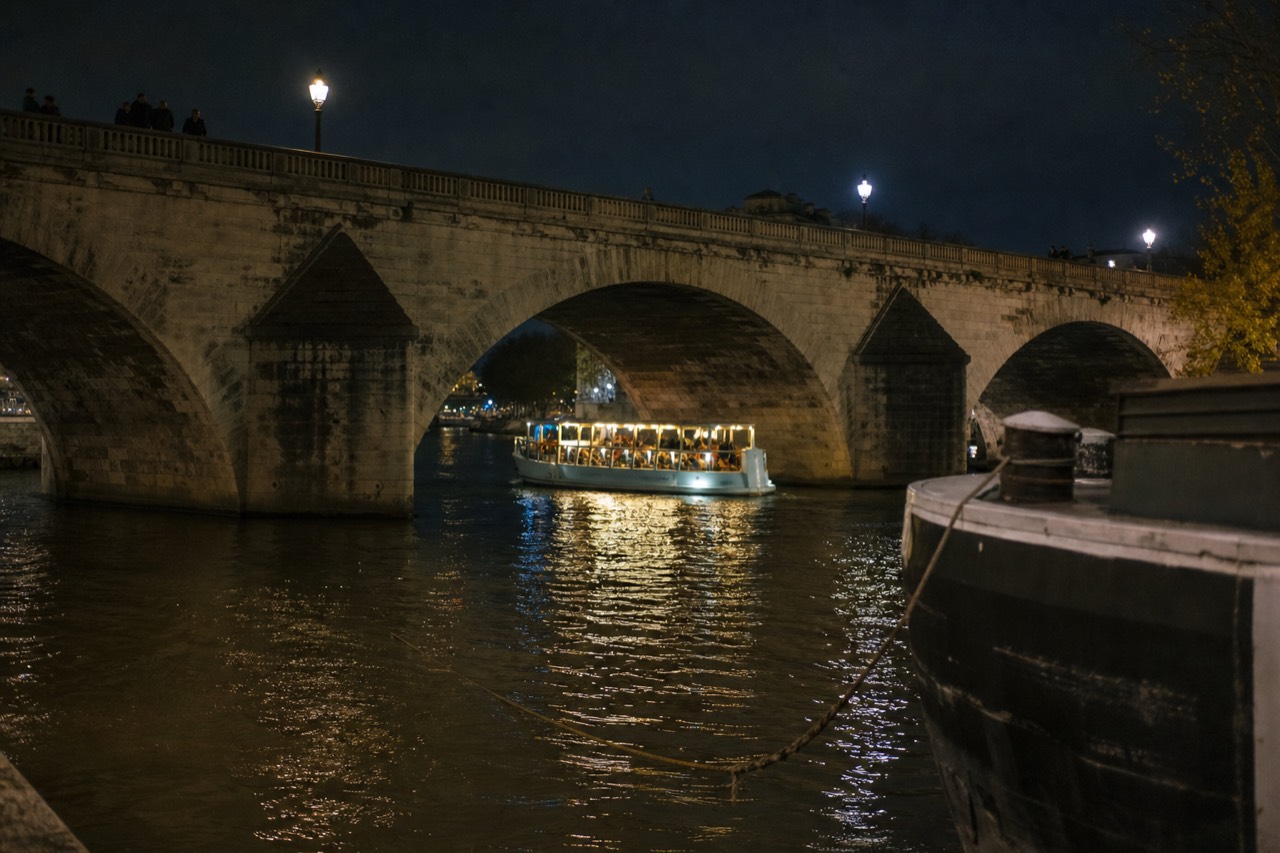
Is the Seine River cruise better at night or day?
There is no single winner, and that is the honest answer: daytime wins for clear landmark views, photography detail and lighter morning crowds, while night wins for atmosphere, illuminated bridges and the Eiffel Tower sparkle, which runs five minutes at the start of every full hour after dusk. Choose day for your first visit, night for the romance.
The question hides a practical trade-off that first-time visitors often miss. A daytime cruise shows you the architecture: the flying buttresses of Notre-Dame, the stonework of the Louvre, the detail on Pont Alexandre III. A night cruise shows you the city as a light show, and Paris leans hard into that reputation. The river itself is the same, roughly an hour's loop for most sightseeing products, but the two experiences barely resemble each other.
It also depends on what you are booking. The standard one-hour sightseeing boats run all day, so the day-versus-night choice applies directly to them. Dinner cruises and champagne evening cruises only exist after dark or at sunset, so if you want food, music or a glass of Champagne on the water, the decision has already been made for you. Our guide to the best time for a Seine cruise breaks the calendar side of this question down further.
One more framing point worth making early: the most crowded sailing of the day is usually the one just before and just after sunset, because that is when everyone wants to be on the water. If your heart is set on night, the later sailings are often calmer than the sunset peak.
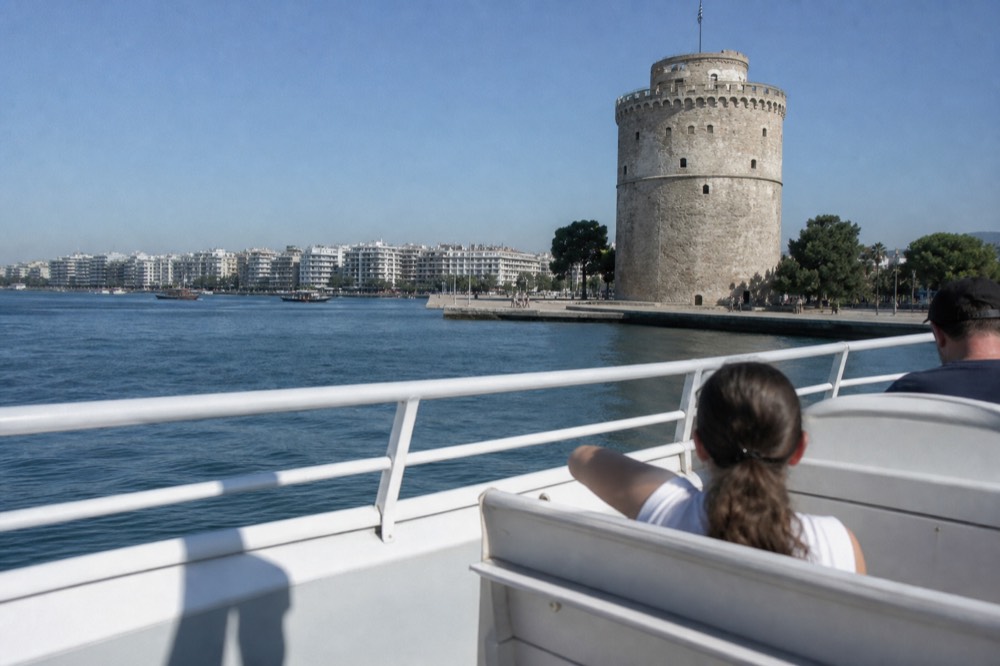
What you actually see on a daytime Seine cruise
Daylight gives you the complete monument list in full detail: Notre-Dame's restored façade, the Louvre's riverside wings, Musée d'Orsay's famous clocks and the ornate sculpture of Pont Alexandre III, all visible from the open upper deck. Morning sailings, roughly from the first departures around 10 a.m., are consistently the emptiest boats of the day.
Photography is the strongest argument for daylight. The sun crosses the river more or less east to west, so one bank is always lit while the other sits in shadow, and morning light is softer and cleaner than the harsh midday glare. Traveler reports from 2025 and 2026 consistently recommend the first sailings for calmer decks, easier upper-deck access and better natural light before the crowds build. If you want clean, sharp photos of the buildings rather than the lights, morning is your slot.
The trade-off is honesty about what you lose. In daylight the Eiffel Tower is an iron structure, impressive but not magical. The bridges are traffic corridors. Nothing glows. Some visitors coming off a midday sailing report that the experience felt pleasant but a little flat compared with what they had imagined, and that is a fair reaction: daytime is about information and views, night is about mood.
The value case for daytime is also strong. The most-booked sightseeing product in the city, Bateaux Parisiens' one-hour cruise from the foot of the Eiffel Tower, runs from $21 per person, carries a 4.4/5 rating from close to 90,000 reviews, and costs exactly the same whether you board at noon or at 9 p.m. You are not paying a night premium on standard sightseeing boats; the price difference only appears when you move to evening products with drinks or dinner included.
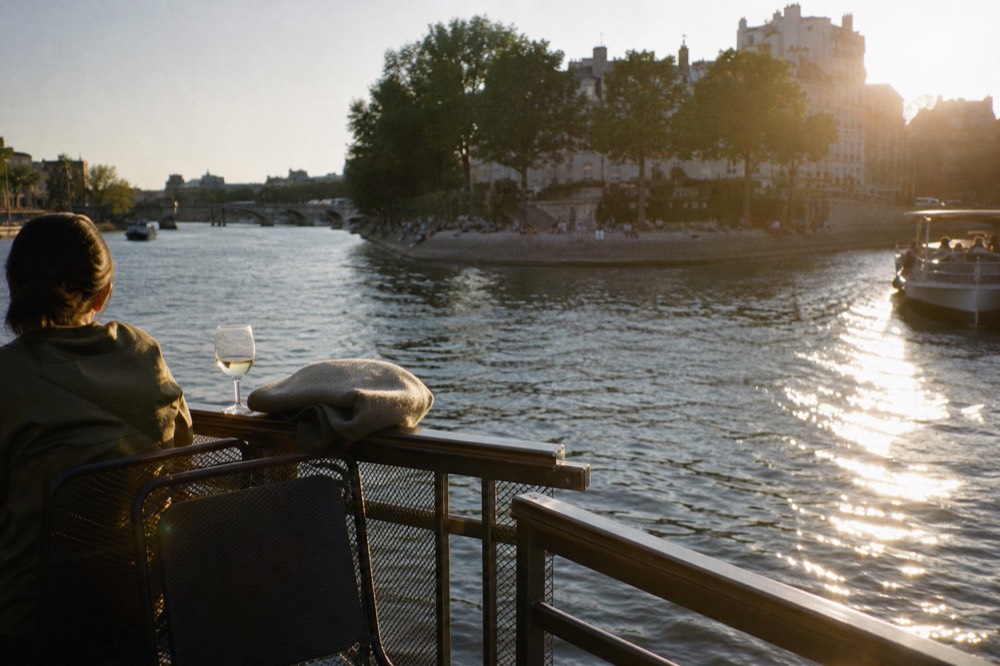
If you want the transition rather than a choice, there is a middle path. The sunset aperitif cruise from France Tourisme departs Square du Vert-Galant at Pont Neuf on an open-top terrace boat with a bar, about one hour, capacity around 130, one glass of organic wine, Champagne or a soft drink included, and blankets in cooler weather. The rating sits around 4.0-4.1 with about 544 reviews, and the live listing has the current price. It is the only product in the city departing from Pont Neuf rather than the Eiffel Tower or Notre-Dame, and it deliberately straddles the day-night line: you board in daylight and finish in the dark.
Day versus night at a glance
| Factor | Daytime cruise | Night cruise |
|---|---|---|
| Monument detail | Full architectural detail, clear views of stonework and façades | Silhouettes and illuminated outlines; detail is lost |
| Photo light | Soft morning light, sharp images; harsher at midday | Golden and artificial light; dramatic but low detail |
| Eiffel Tower | Iron structure in daylight | Illuminated, plus the hourly five-minute sparkle |
| Crowds | Lightest on first morning sailings | Sunset sailings busiest; later departures calmer |
| Weather sensitivity | Rain visibly degrades the view | Light rain matters less; lights still read well |
| Price (standard sightseeing) | Same fare as night, from $21 on the biggest product | Same fare; evening products with drinks cost more |
| Best for | First visit, photographers, families | Couples, second visit, atmosphere seekers |
What changes after dark: illuminations and the Eiffel Tower sparkle
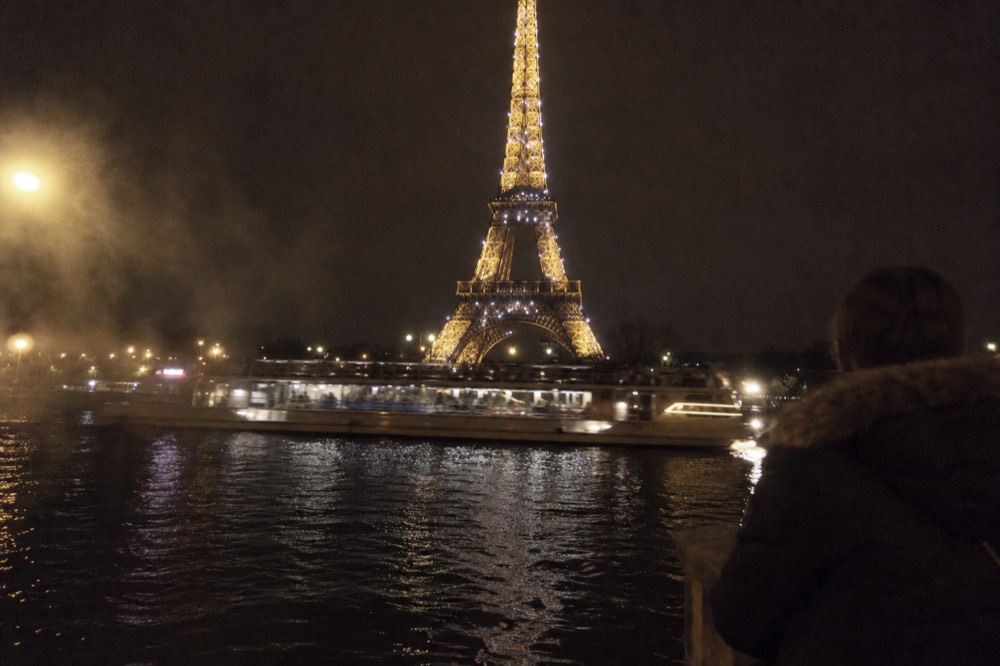
After dark the Seine becomes a lighting route: bridges, monuments and the Louvre's façade are illuminated, and the Eiffel Tower sparkles for exactly five minutes at the start of every full hour after dusk, until around midnight, or 1 a.m. in summer. Evening dinner sailings are timed so later departures usually catch the sparkle.
That sparkle detail is the single most useful piece of timing knowledge for a night cruise, and it is genuinely mechanical rather than random. The tower's golden lighting switches on at dusk via sensors, then the 20,000-bulb sparkle effect fires for five minutes on the hour, every hour, until the lights go out. The first sparkle shifts with the season: roughly 6 p.m. in deep winter, 7 to 9 p.m. in spring and autumn, and as late as 10 p.m. in midsummer. If your cruise is on the water when a full hour strikes, you get the show.
This is why the timing of evening products matters more than most travelers realize. Typical dinner-cruise departures cluster around 6:15 p.m., 8:15 to 8:30 p.m. and 9:15 p.m., and operators time these slots deliberately so that the later sailings intersect the sparkle. A 9:15 p.m. September departure, for example, will usually be mid-river at 9 p.m. or 10 p.m. and catch at least one full show. Book the earliest evening slot and you may spend the entire cruise in plain twilight.
The highest-rated evening cruise in the city leans into exactly this. Bateaux Parisiens' Evening River Cruise with Champagne departs near Notre-Dame Cathedral on a smaller boat, one hour, seasonal from April to September, with live French and English commentary via loudspeaker, one glass of Champagne (or a beer or soft drink) and a Notre-Dame-shaped biscuit. It carries a 4.6/5 rating from 566 reviews and runs from $45 per person. It is the only evening cruise departing from Notre-Dame rather than the Eiffel Tower, which also makes it a natural pairing with a daytime Eiffel-area sailing: two cruises, two departure points, two times of day.
There is one honest caveat about night sailings: you see less than you think you will. The illuminated city is beautiful, but the river is dark between monuments, and photo quality drops sharply without a tripod. Guests who expect night-cruise photos to look like the brochures are often disappointed. Go for the atmosphere and the memory, not the portfolio.
Crowds, queues and the best departure times
Crowds follow the sun: first morning sailings are the emptiest boats of the day, sunset sailings are the busiest, and peak-period queues of 15 to 60-plus minutes have been documented even with pre-purchased tickets. Arriving 30 to 45 minutes early is the standard advice for securing an upper-deck railing seat.
The queue problem is real and worth planning around. Reviews from 2025 and 2026 describe waits of 15 to 60 minutes and sometimes longer at the busiest docks in peak season, even for passengers holding advance e-tickets, because boarding is physical: one pontoon, one gangway, security checks at the Eiffel Tower embarkation points. Operators themselves recommend arriving 15 to 30 minutes early; seasoned reviewers push that to 30 to 45 minutes if you want a specific seat, especially on evening sailings when everyone wants the open upper deck.
Morning flips that equation. The first departures of the day, typically around 10 a.m., carry fewer passengers, the light is at its best, and the decks are calm enough to move side to side as monuments pass. Families with small children, photographers and anyone sensitive to crowds should default to morning without much agonizing. The one thing morning cannot give you is the sparkle, and no amount of queue strategy changes that.
Weather cuts differently at each end of the day, and this is where the flood mechanism matters. High water genuinely disrupts Seine cruises at defined official thresholds: the City of Paris states navigation stops outright at 4.30 m on the Austerlitz gauge, and below that operators reroute, turn back early or close upper decks to avoid bridge strikes, exactly as named operators did during the October 2024 high-water event. In practice this is a winter-and-spring risk, rare in the summer booking season, and operators monitor official levels hour by hour. If your sailing falls in a wet winter week, a quick check of the river level before you leave the hotel is reasonable diligence. The authoritative source for real-time levels is Vigicrues, the official French flood-monitoring service, the same tool the operators themselves use. The same river that occasionally floods is also, each summer, open for supervised swimming; our guide to whether the Seine is safe for swimming covers the current testing rules.
Which Seine cruise should you pick for each time of day?
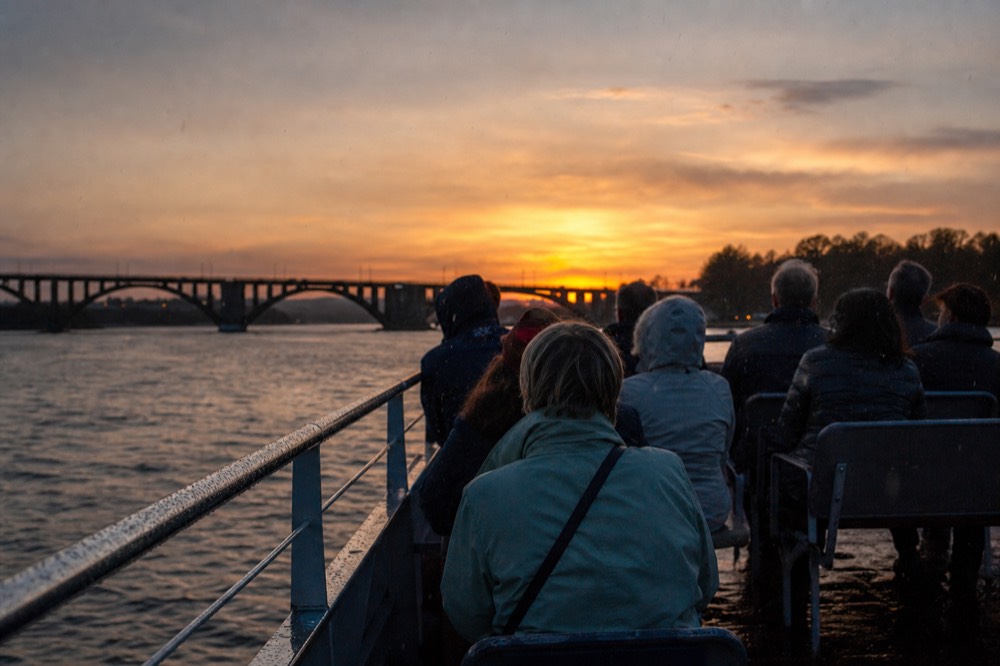
For morning, book any standard one-hour sightseeing cruise and arrive early; for sunset, book a terrace aperitif cruise from Pont Neuf; for full night, book a champagne evening cruise or a dinner cruise timed to the hourly sparkle. The day-versus-night question ultimately resolves into which of those three experiences you actually want.
If you are still torn, a pattern that works well for longer trips is to do both, cheaply. Take the one-hour daytime cruise from the Eiffel Tower, from $21 per person, as your orientation ride: you will learn the geography, see every major monument clearly and know what you want to revisit on foot. Then, on a later evening, take a short champagne cruise for the lights. Two standard cruises still cost less combined than a single mid-tier dinner cruise, and you get the best of both answers to this question.
The dinner-cruise route deserves a mention here because it is the one format where night is not optional. If your goal is a meal on the water, you are booking an evening product by definition, and the timing advice above applies: pick a later sailing slot so the sparkle falls inside your dinner. Our Seine dinner cruise guide covers the menu and dress-code side of that decision, and if you are weighing the specific question of evening light versus full dark, the piece on night cruises around the Eiffel Tower goes deeper on the late slots.
For travelers who genuinely cannot decide and only have one evening in Paris, the sunset aperitif cruise is the pragmatic compromise: daylight boarding, golden hour mid-river, and a dark, illuminated final stretch. You will not get the full detail of a morning sailing or the full drama of a 10 p.m. departure, but you will touch both worlds in a single hour, with a glass in hand. Whichever slot you land on, Cruise in Seine River keeps the full roster of day, sunset and night products in one place so you can compare departure times side by side before committing. And if you are still weighing whether any of this is worth booking at all, we cover the full verdict on taking a Seine cruise separately.
The short answers below cover the questions travelers ask most: whether night or day is better, exactly when the Eiffel Tower sparkles, which sailing has the fewest crowds, whether weather can cancel a cruise, how night photos turn out and whether evening departures cost more. Each answer is drawn from the verified figures and timing facts laid out above, so you can decide quickly and book with realistic expectations.
Common questions about night or day Seine cruises
Is the Seine River cruise better at night or day?
Neither is objectively better. Day gives clear monument detail, softer morning light and lighter crowds; night gives illuminated bridges and the Eiffel Tower's five-minute sparkle on the hour after dusk. First-time visitors get more from a daytime sailing; the night version suits couples and repeat visitors chasing atmosphere.
What time does the Eiffel Tower sparkle during a Seine cruise?
The tower sparkles for five minutes at the start of every full hour after dusk, until around midnight, or 1 a.m. in summer. The first sparkle shifts seasonally, roughly 6 p.m. in winter and as late as 10 p.m. in midsummer, so any cruise on the water when a full hour strikes will catch it.
Which Seine cruise time has the fewest crowds?
The first morning sailings, typically around 10 a.m., are consistently the emptiest. Sunset departures are the busiest, and peak-period queues of 15 to 60-plus minutes have been documented even with pre-purchased tickets. Arriving 30 to 45 minutes early secures an upper-deck railing seat.
Can weather or river levels cancel a Seine cruise?
Yes. Navigation on the Seine through Paris is officially halted once the river reaches 4.30 m at the Austerlitz gauge. Below that threshold, operators typically shorten routes, close upper decks or switch boats rather than cancel. No flood-driven suspensions were recorded in 2025 or 2026, and early September 2026 levels sat in the normal range around 0.95 m.
Is a night Seine cruise good for photos?
Only partly. The illuminated monuments are dramatic, but the river is dark between them and handheld night photos tend toward blur. Go into a night cruise expecting atmosphere and memory rather than portfolio-quality images; morning light is far better for photography.
Do Seine cruises cost more at night?
Standard one-hour sightseeing cruises charge the same fare at any time of day, from $21 per person on the most-booked product. The price premium only appears on evening-format products, such as champagne cruises from $45 per person and dinner cruises, which include drinks, food or entertainment.